
MANAGEMENT
The management, represented by the niece of Elisabeth Käsemann, is being advised by a board of trustees. Among those are prominent figures who are striving to promote a democratic culture and the protection of human rights both at home and abroad.
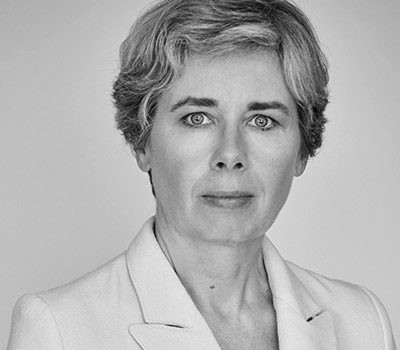
Dorothee Weitbrecht, PhD, founder and executive director of the Elisabeth Käsemann Foundation, historian with a focus on the international culture and politics of memory.
BOARD OF TRUSTEES
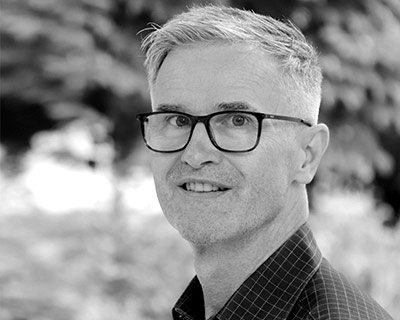
Chair
Thomas Fischer, PhD, professor, ret., of Latin American History and former director of the Central Institute for Latin-American Studies (ZILAS) at the Catholic University of Eichstätt-Ingolstadt, Germany; 2016-2020 chairman of the Association of German Latin-American Studiess, since 2020 member of the ADLAF-board of directors; member of the committee of editors of the journal “Iberoamericana. América Latina, España y Portugal”.
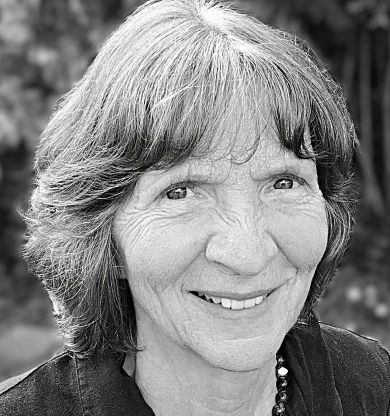
Aleida Assmann, PhD, professor, ret., of English and General Literature at the University of Konstanz (1993-2014). Member of academies, fellowships, and numerous visiting professorships in Germany and abroad. In 2017, she and her husband Jan Assmann received the Balzan Prize 2017 for their research on cultural memory, and in 2018, she and Jan Assmann received the Peace Prize of the German Book Trade.
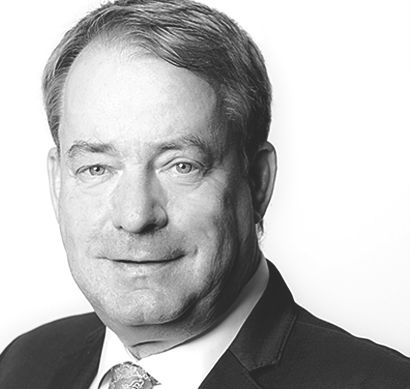
Dieter Lamlé, former ambassador of the Federal Republic of Germany, served as ambassador in Buenos Aires (Argentina) and Riyadh (Saudi Arabia). He was consul general in Hong Kong and Macao, as well as in Erbil (Iraq), and deputy head of mission at the German embassy in Lima (Peru). At the Federal Foreign Office of the Federal Republic of Germany in Berlin, he served as Regional Director for Latin America and the Caribbean, head of State Secretaries’ Office, head of the Department for Personnel Development and Planning (Higher Service Division), and head of the Department for Human Rights, International Protection of Human Rights, and EU Human Rights Policy. In addition, he served as a desk officer for policy (Security Council, Asia) at the Permanent Mission of the Federal Republic of Germany to the United Nations, as well as head of protocol for the state of Berlin and head of the department of foreign affairs.
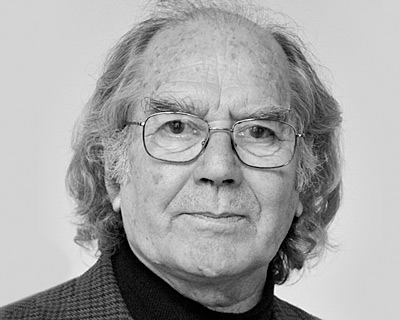
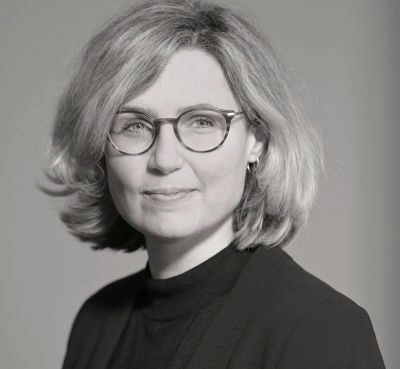
Nina Schneider, PhD, professor of Latin American History at the Katholische Universität Eichstätt-Ingolstadt; visiting faculty positions: Institute for the Study of Human Rights (ISHR) at Columbia University, Universidade de Brasília, Jean Monnet Fellow at the European University Institute (EUI) in Florence, acting chair of the Department of Technology and Environmental History at Ruhr Universität Bochum: head of two interdisciplinary research groups at the Center for Global Cooperation Research (GCR21) at the University of Duisburg-Essen.
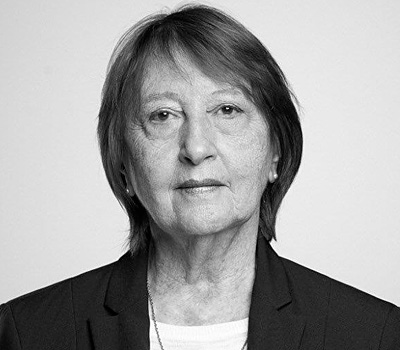
Luisa Wettengel, PhD, lecturer at the Faculty of Psychology at the University of Buenos Aires; member of the organization of the Relatives of the Disappeared German Citizens and People of German Descent in Buenos Aires.
ADVISORY BOARD
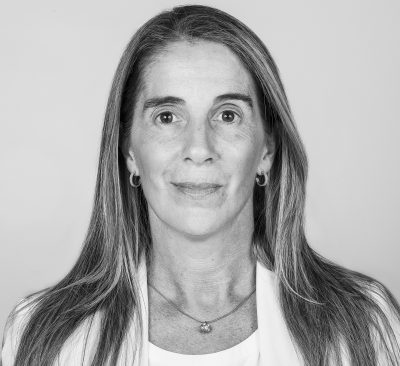
Natalia Barbero, PhD, is a professor of Criminal Law, International Criminal Law, Transitional Justice and Human Rights at the University of Buenos Aires and other universities in Latin America and the Caribbean, teaching at the School of Law and graduate levels (LLM and PhD). She works as an expert in transitional justice and peace processes, providing assistance and training to judges and prosecutors in cases involving international crimes. She also works as a consultant on the drafting of protocols and working documents to improve access to justice in cases involving serious human rights violations, with a particular focus on torture, enforced disappearances, human trafficking, and gender-based violence.
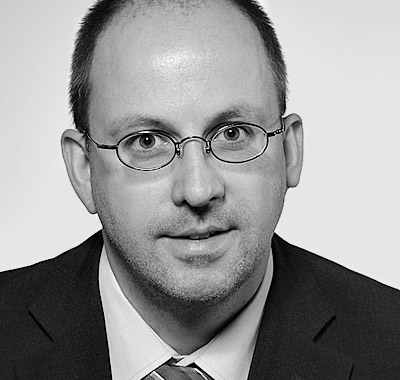
Stefan Drößler, deputy director of the University Library of Tübingen; member of Amnesty International, active work in different committees of the German Section, spokesman of the Stuttgart-Nordwürttemberg district.
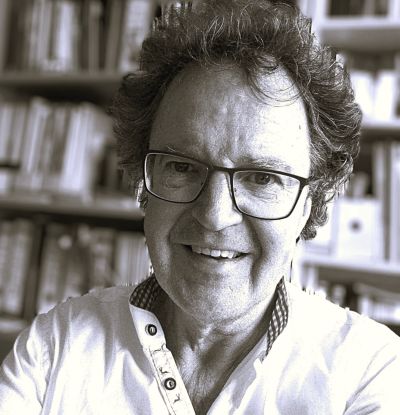
Ralf Häußler, protestant theologian; since 1986, he has been working with communities in Central America in cooperation with the Evangelischen Landeskirche Württemberg, Brot für die Welt and the Ökumenische Initiative Mittelamerika e. V.; until 2004 he was director of studies in the field of Economics and Working Life at the Evangelische Akademie Bad Boll as well as associate professor at the University of Heilbronn; until 2012, he served as a pastor in Ulm; for 13 years he was director of the Zentrum für entwicklungsbezogene Bildungsarbeit der Evangelischen Landeskirche Württemberg (ZEB); 2026 he started a research project at the Jena Center for Reconciliation Studies / JCRS on “Indigenous Spirituality as a Human Right in Conflicts Over Natural Resources in Indigenous Territories”.
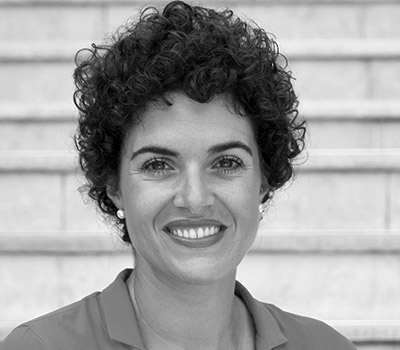
Mona Hafez lives and works in Cologne as head of project at GIZ (Deutsche Gesellschaft für Internationale Zusammenarbeit GmbH). After working in Russia, France, Tunisia, and Senegal, she is currently in charge of the Africa portfolio (Kenya, South Africa, Senegal) in the Global Project Education. She is an active member of DGVN e. V. (German Society for the United Nations) and EWMD (European Women´s Management Development Network). Mona Hafez is a speaker and guest lecturer at universities and institutions on the topics of diversity, leadership, and international cooperation.
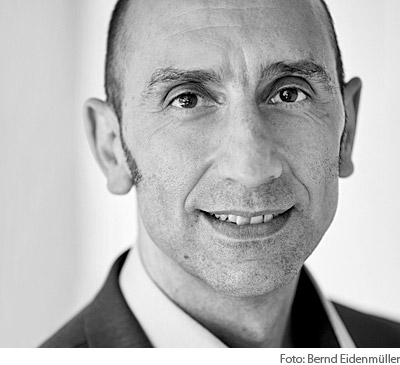
Ramiro Vera-Fluixá studied International Relations at the Universidad del Salvador in Buenos Aires. He then took up the Chair of History of International Relations at the Universidad de Congreso in Mendoza. His main academic focus was on regional Integration Processes and Federalism, areas in which he conducted research and published papers. He has lived in Germany since 1992, where he founded his family. He has been working for over twenty years in the field of international mobility projects at the International and Specialized Placement (ZAV) of the German Federal Employment Service (BA). Since December 2025, he head the Bureau for International Organisations‘ Personnel (BFIO) there.
STAFF
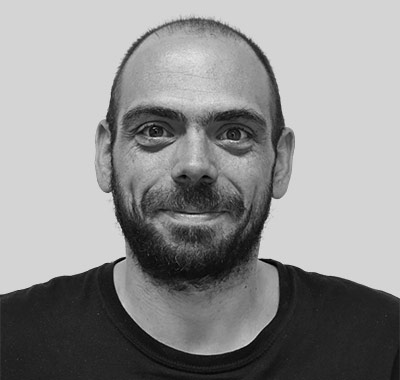
David Graaff is a political scientist and historian specializing in Latin America. As a freelance journalist, researcher, and translator, he has dealt extensively with socio-political developments in Colombia. He now lives in Freiburg im Breisgau, where he works at the Goethe-Institut. He is fluent in German, Spanish, and English.